
The Lesia's learning journal
Why play-based learning matters in the early years
Understand how purposeful play supports language, movement, problem-solving and social development in South African early childhood settings.
The direct answer.
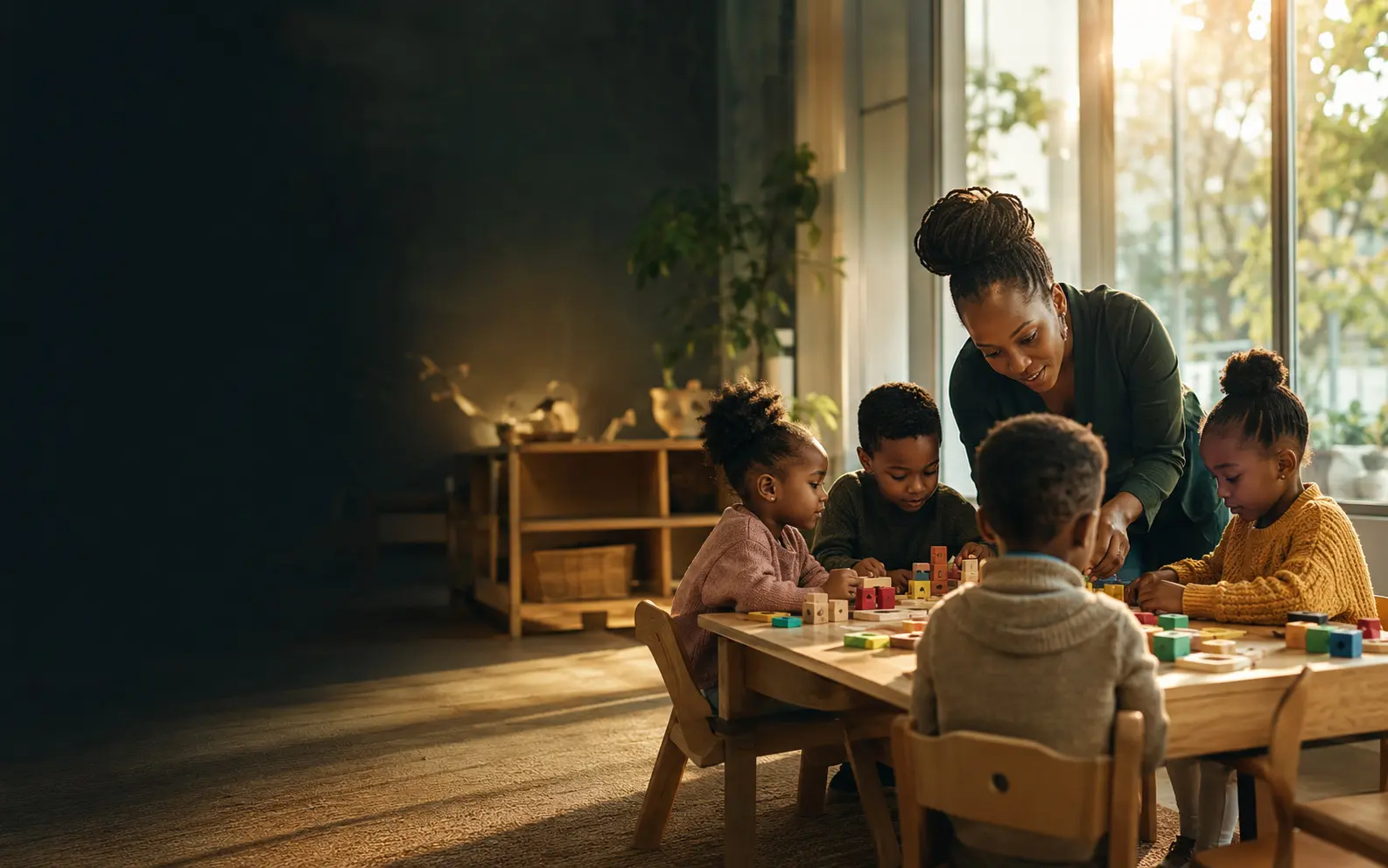
Play-based learning matters because young children learn by actively exploring, communicating, moving, imagining and solving problems. Purposeful play allows an educator to support language, physical, cognitive and social-emotional development together instead of treating them as isolated school subjects.
01Play is a serious learning process, not a reward after learning.
02The educator prepares the environment, observes, asks questions and extends thinking.
03Useful play materials can be simple, local and low-cost.
04Activities should be appropriate to the child's age, stage, language and needs.
What play-based learning actually means
Play-based learning is not leaving children alone with toys and hoping learning happens. It is an approach in which children are active, the experience is meaningful and the educator intentionally supports development without controlling every move.
The Department of Basic Education describes play as active, interactive, socially engaging, meaningful and joyful. Those features help children connect new ideas to what they already know.
How play supports whole-child development
One well-designed play experience can support several areas at once.
- ✦Language: children name objects, tell stories, negotiate roles and listen to others.
- ✦Thinking: they compare, sort, predict, test ideas and solve practical problems.
- ✦Movement: building, drawing, pouring, running and balancing develop fine and gross motor control.
- ✦Social-emotional growth: children practise taking turns, managing frustration and reading social cues.
- ✦Creativity: open-ended materials allow more than one correct answer.
The educator's role during play
A skilled ECD practitioner sets up a safe environment, chooses materials with a purpose, observes carefully and knows when to join the play. Questions such as ‘What do you think will happen?’ or ‘How can we make it stronger?’ extend thinking without taking ownership away from the child.
Observation also helps the practitioner notice language development, confidence, interests, movement and relationships. Those observations can guide the next activity or indicate when a child may need additional support.
Low-cost play ideas for South African ECD settings
Quality play does not depend on expensive imported equipment. Check every material for safety and suitability before use.
- ✦A clean container shop for counting, sorting and role-play.
- ✦Bottle tops, stones or blocks for patterns and early number concepts.
- ✦Water, cups and funnels for volume, coordination and vocabulary.
- ✦Songs, clapping games and movement stories in children's home languages.
- ✦Cardboard boxes for building, imaginative play and collaborative problem-solving.
Connect play to the National Curriculum Framework
South Africa's National Curriculum Framework from birth to four is intended for ECD programmes, training organisations, practitioners, parents and caregivers across different settings. It helps educators plan experiences that support children's learning and development without turning early childhood into a smaller version of formal school.
Use the framework to clarify the learning purpose, then remain responsive to the children in front of you. Good planning creates direction; good observation helps you adjust.
This guide provides general educational information for South African ECD learners and practitioners. Programme, employment, registration and regulatory requirements can change. Confirm current requirements with the relevant institution, quality assurer, provincial department or municipality.
People also ask
Clear answers to
common questions.
Short, direct answers designed to help learners, families and ECD practitioners make informed decisions.
01Is play-based learning just free play?+
No. Free play is valuable, but play-based learning also includes intentionally prepared experiences in which an educator observes, supports language, asks questions and extends learning.
02Can play prepare children for school?+
Yes. Purposeful play can build language, early numeracy concepts, self-regulation, movement, problem-solving and social confidence that support later learning.
03Do ECD centres need expensive toys for quality play?+
No. Safe everyday and recycled materials can support rich learning when they are age-appropriate, open-ended and used with a clear purpose.
Verified reading
Official sources behind this guide.
We use first-party South African sources and link to them directly so readers can check the current record for themselves.